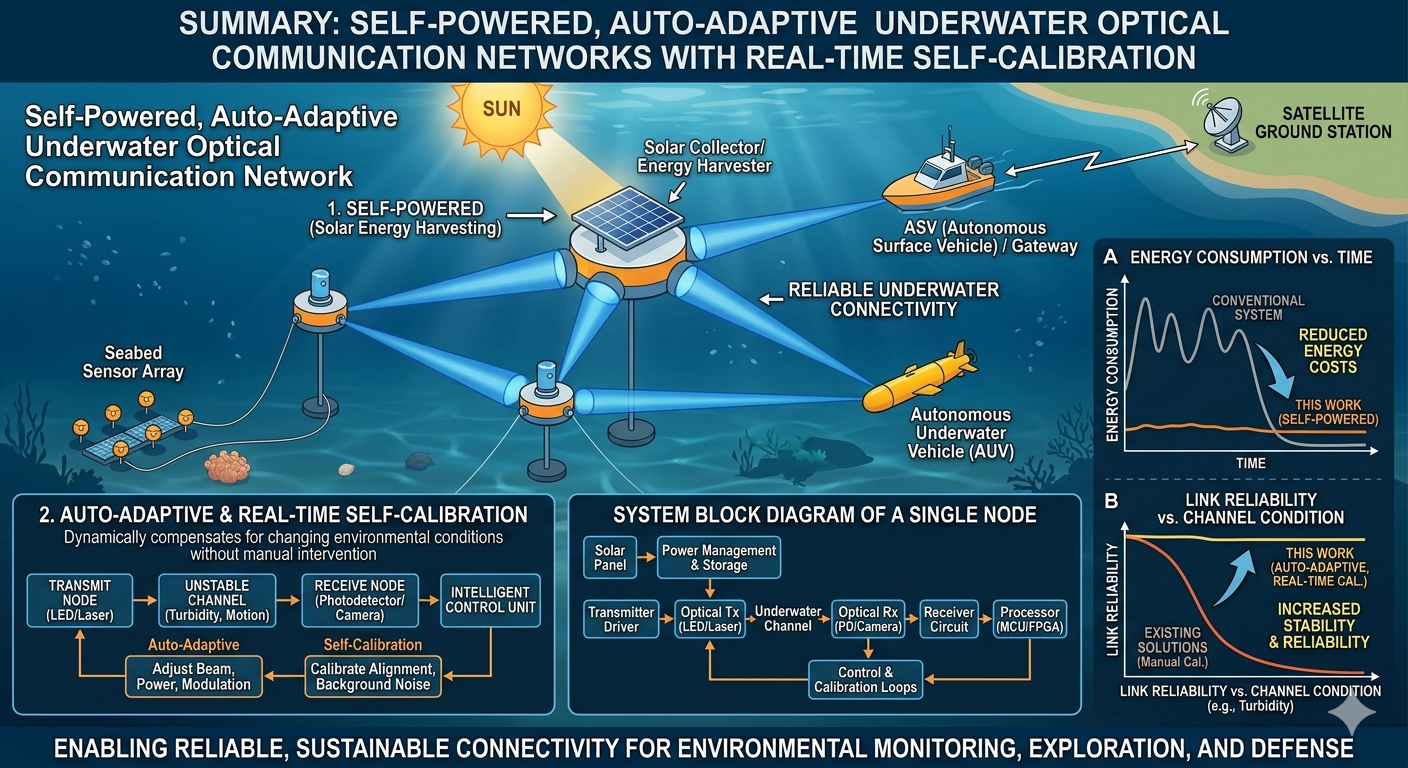
Self-Powered, Auto-Adaptive Underwater Optical Communication Networks with Real-Time Self-Calibration
Underwater communication systems are critical for environmental monitoring, exploration, and defense, yet they remain constrained by high energy costs and unstable channel conditions. Existing solutions lack adaptability and require frequent manual calibration. This work addresses these challenges by enabling self-powered, auto-adaptive optical networks with real-time self-calibration for reliable underwater connectivity.
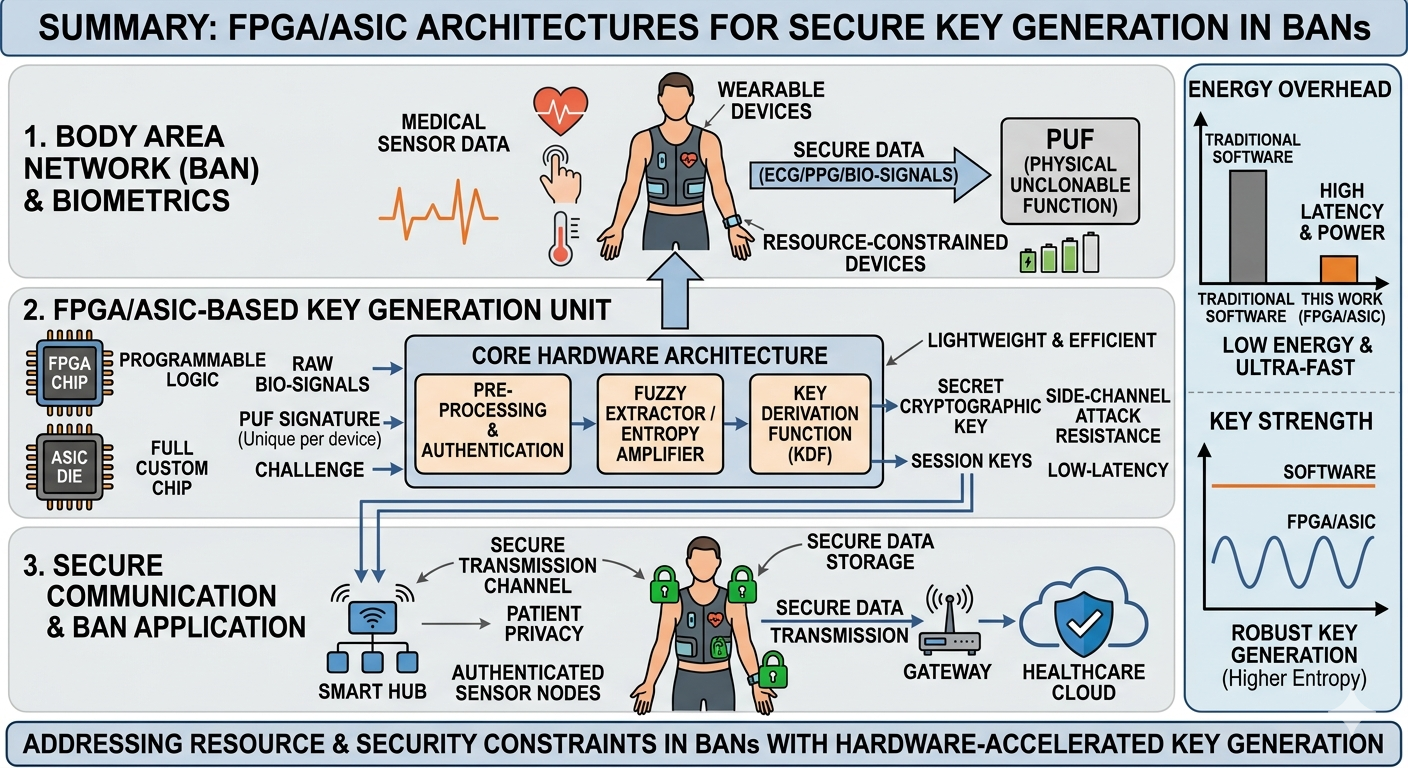
FPGA/ASIC-Based Hardware Architectures for Secure Key Generation in Body Area Networks (BANs)
Body Area Networks (BANs) are increasingly used in healthcare and wearable technologies, where secure and lightweight communication is essential. Traditional software-based security mechanisms introduce latency and energy overheads that are unsuitable for resource-constrained devices. This project develops FPGA/ASIC-based hardware solutions for efficient and secure key generation tailored to BAN environments.
Hardware-Accelerated Semantic and Energy-Efficient OFDM Systems Using FPGA/ASIC Implementations
Modern wireless systems face growing demands for higher efficiency and reduced energy consumption, especially in dense and data-intensive networks. Conventional OFDM techniques do not account for semantic relevance or energy constraints, leading to inefficiencies. This work proposes hardware-accelerated, semantic-aware, and energy-efficient OFDM frameworks to optimize communication performance.
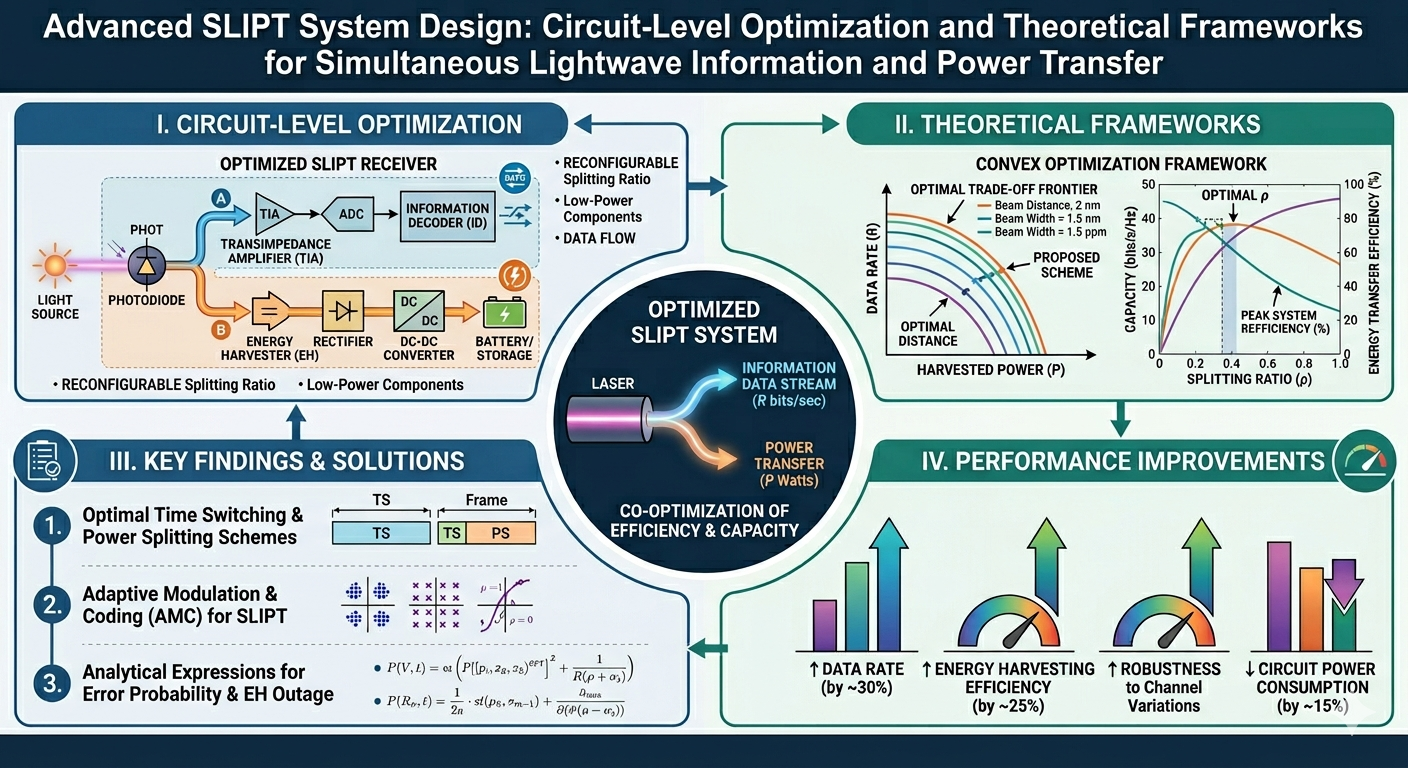
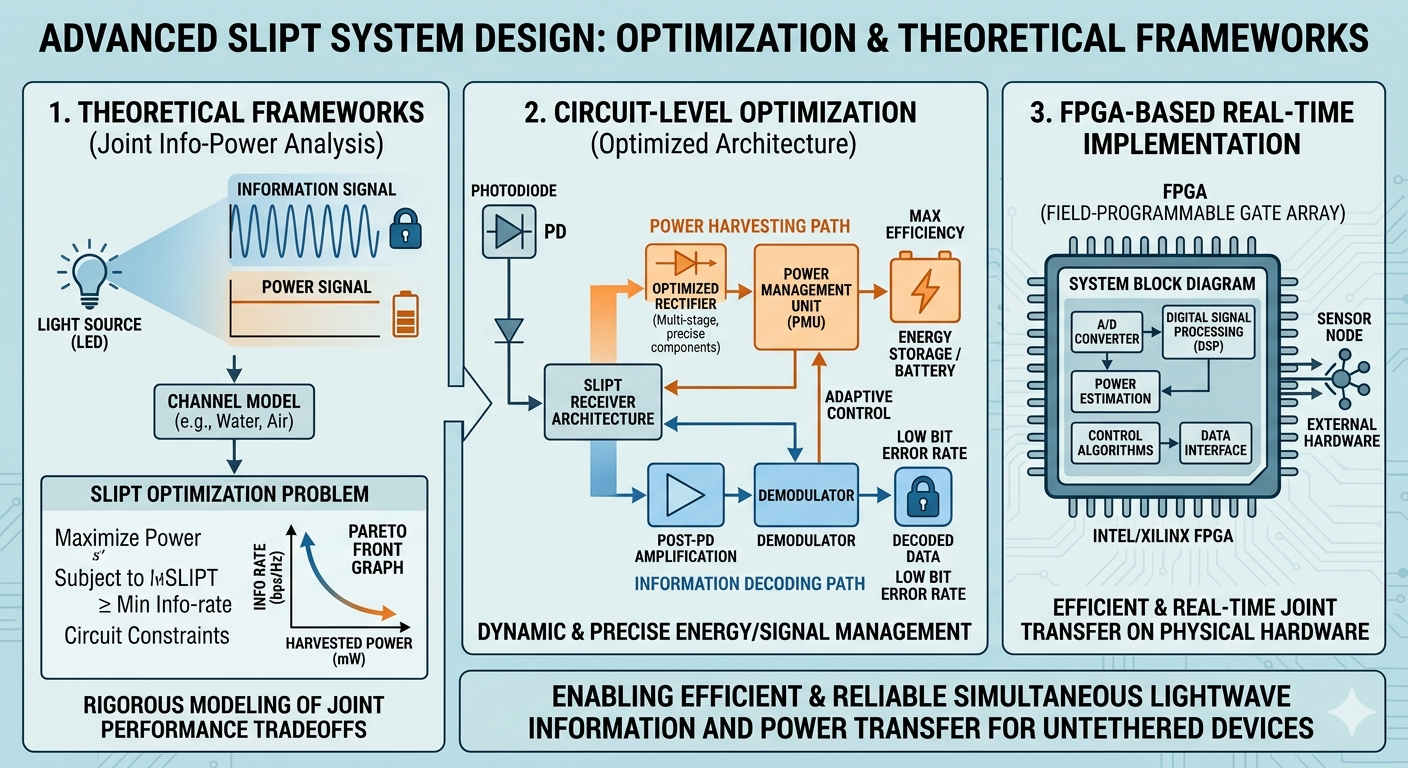
Advanced SLIPT System Design: Circuit-Level Optimization and Theoretical Frameworks for Simultaneous Lightwave Information and Power Transfer
Simultaneous Lightwave Information and Power Transfer (SLIPT) has emerged as a promising approach for enabling energy-constrained communication systems. However, current models lack comprehensive optimization and practical circuit-level implementations. This research advances SLIPT by developing rigorous theoretical frameworks and optimized circuit designs for efficient joint information and power transfer.